Improve Ankle Mobility for Squats: A Smarter Approach Using Core-Tex
If you’ve ever struggled to get depth in your squat, keep your heels down, or maintain an upright torso, there’s a good chance ankle mobility is part of the issue.
Limited ankle dorsiflexion is one of the most common restrictions seen in both fitness and rehab settings — and it often leads to compensations at the knees, hips, or lower back.
But improving ankle mobility isn’t just about stretching harder or forcing more range.
There’s a smarter way.
Why Ankle Mobility Matters for Squats
During a squat, your knees need to travel forward over your toes while your heels stay grounded. This requires sufficient ankle dorsiflexion — the ability of the ankle to bend and allow the shin to move forward.
When that motion is limited, common compensations include:
Heels lifting off the ground
Excessive forward lean
Knee collapse or altered tracking
Reduced squat depth
Over time, these compensations can limit performance and increase stress on other joints.
The Problem With Traditional Ankle Mobility Drills
Most ankle mobility strategies focus on:
Static stretching
Joint mobilizations
Band-assisted drills
While these can improve range of motion temporarily, they often fail to address how the body uses that motion under load.
In other words, the missing link isn’t just mobility — it’s motor control within mobility.
A Different Approach: Reactive Ankle Mobility
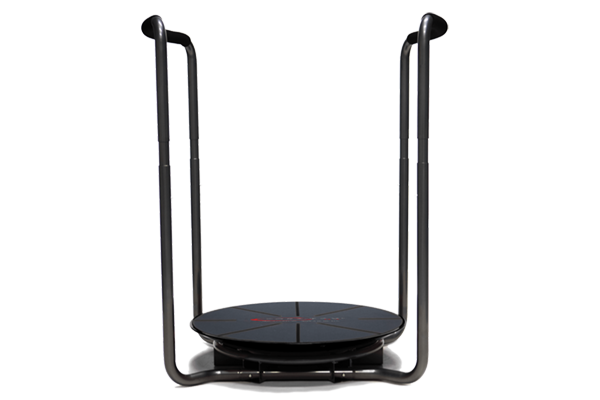
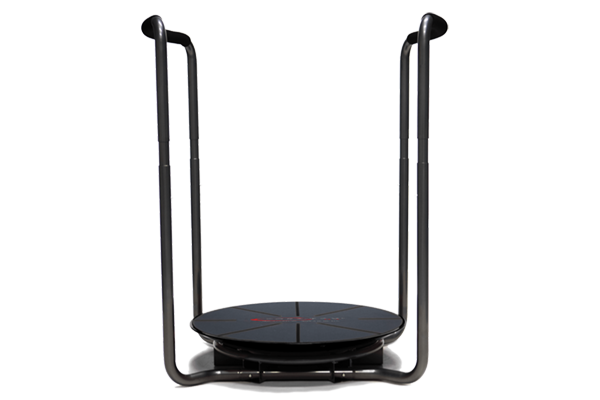
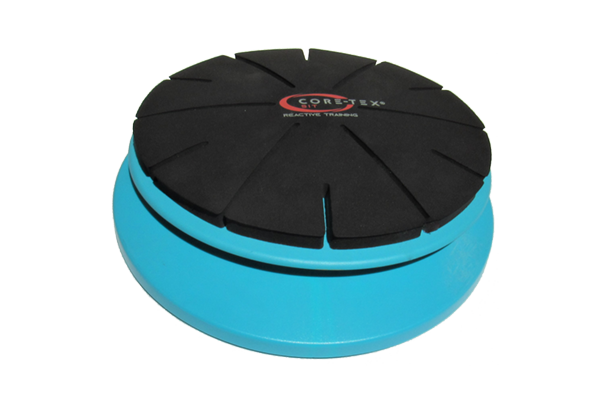
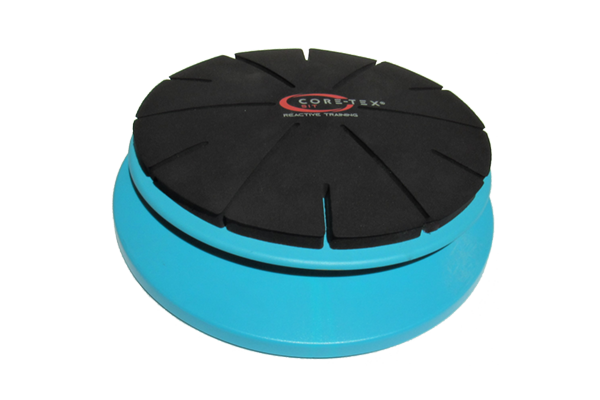
Using Core-Tex, you can train ankle mobility in a way that integrates:
Movement variability
Neuromuscular timing
Load acceptance
Functional carryover
Instead of forcing the ankle into position, the body is placed in an environment where it must adapt in real time.
This creates what we call reactive mobility — where motion is not only gained, but owned and controlled.
See real-world TrackMan data showing how a 10-minute Core-Tex routine unlocks hip internal rotation, improves thoracic spine turn, and delivers immediate gains in clubhead speed and carry distance off the tee.
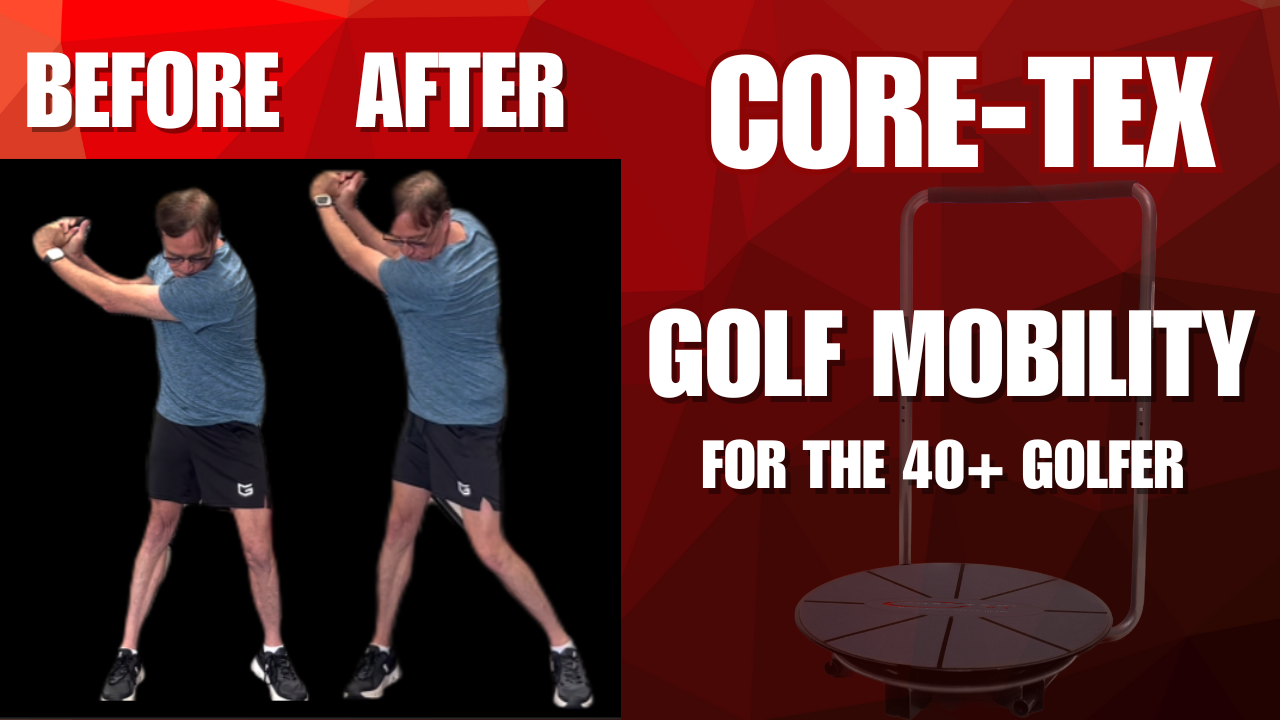
At the PGA Show we measured real swing changes using motion analysis: after just minutes with Core-Tex, a high-level golfer gained 6° in chest turn and 4° in pelvic rotation. That means improved rotation, a longer acceleration window, and real performance benefits — and the potential gains are even larger for most recreational golfers.
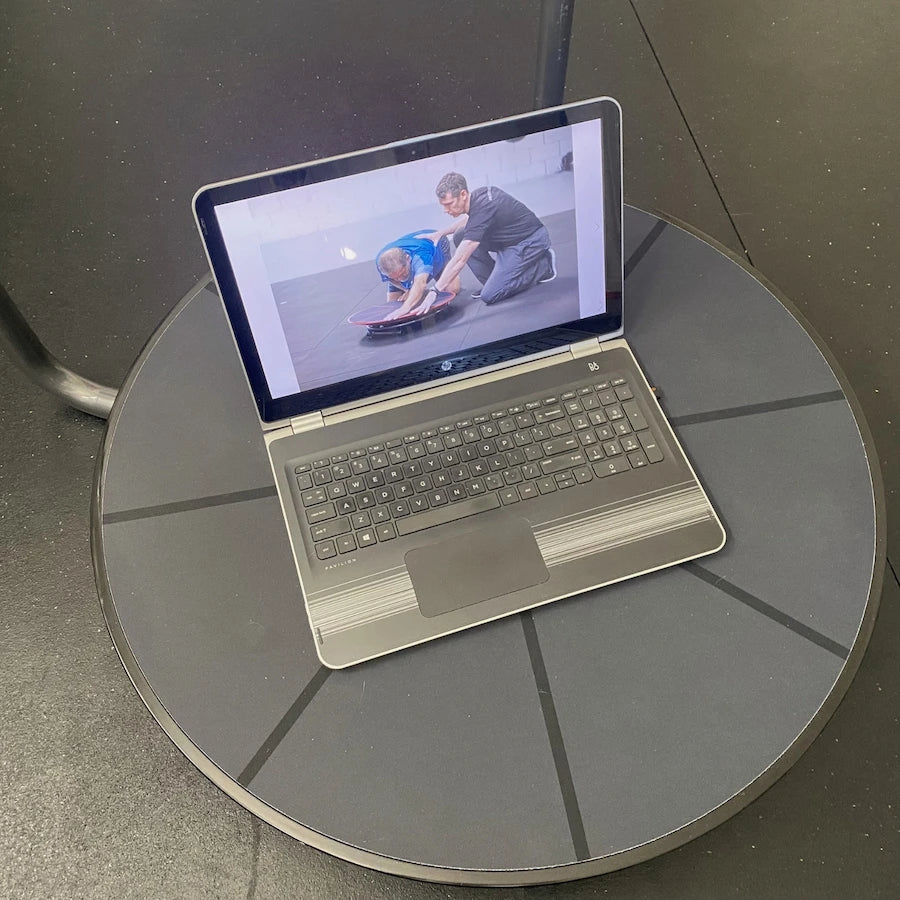
Meet Jim, age 59, who proves that when it comes to mobility and performance in golf, you’re never too old to swing stronger, smoother, and pain‑free. In this video, you’ll follow his inspiring session using Core‑Tex—a gamechanger in golf fitness and golf mobility—and discover how it immediately influenced his thoracic rotation, hip motion and X-factor in his golf swing.








Leave a comment (all fields required)